How to Choose Pro Audio Equipment That Actually Works for You
I have spent more hours than I care to count staring at spec sheets, scrolling through forum arguments, and standing in front of racks of gear trying to decide what to buy. The truth is, most of the anxiety around choosing pro audio equipment comes from not knowing what your own workflow actually needs. After years of trial and error, I have learned that the best gear is not the most expensive or the most hyped. It is the stuff that disappears into your process and lets you focus on the music.
When I first started recording, I thought a fancy microphone would fix everything. I bought a Neumann that I could barely afford, plugged it into a cheap interface, and wondered why my vocals still sounded thin. That mistake taught me something that has saved me thousands of dollars since: your chain is only as strong as its weakest link. You can have a world-class microphone, but if your pre-amp is noisy or your room is untreated, you will never hear what that mic can really do.
Start With the Signal Path
Every piece of pro audio equipment you buy sits somewhere in a signal path. Sound enters a microphone, travels through a pre-amp, gets converted to digital by an audio interface, lands in your DAW, and eventually comes out through your studio monitors or headphones. If any one of those components is subpar, it degrades everything downstream. So before you spend big money on a single item, ask yourself where your weakest point is right now.
For most home-studio beginners, that weak point is the audio interface. A decent interface like those from Focusrite gives you clean pre-amps, reliable conversion, and low latency. I have used a Focusrite Scarlett for years and it has never let me down. It pairs well with a wide range of microphones, from an AKG C214 for acoustic guitar to a Shure SM57 for snare drums. The interface is the backbone of your setup. Skimp on it and you will fight noise and dropout issues forever.
Microphones: Quality Over Quantity
I own five microphones now, but I used only two for the first three years I recorded seriously: a Shure SM57 and an AKG C414. That pair covered electric guitar, acoustic guitar, vocals, and even some drum overhead work. You do not need a locker full of mics to get professional results. You need a few good ones that you know intimately.

When people ask me what to buy first, I usually point them toward a dynamic mic like the Shure SM57 and a large-diaphragm condenser like the Rode NT1 or the AKG C214. The dynamic handles loud sources and isolation. The condenser gives you detail and air. Together they cover almost everything a small studio needs. If your budget stretches further, a Neumann TLM 102 is a fantastic vocal mic that works on many sources, but it demands a clean pre-amp and a treated room to shine.
I have also grown fond of ribbon microphones for certain tasks, but they are fragile and need careful placement. That is the kind of nuance you only learn by using gear in real sessions, not by reading reviews.
Monitoring: What You Hear Is What You Get
Studio monitors are the window into your mix. If your monitors lie to you, your mixes will translate poorly to other systems. I started with a pair of budget monitors that boosted the low end. My mixes sounded great in my room but fell apart in cars and earbuds. I switched to a pair of Yamaha HS8s, which are brutally honest, and my mixes improved overnight. Not because the monitors were better in some absolute sense, but because I could finally hear what was actually there.
If monitors are out of reach financially, invest in good studio headphones. Sennheiser HD 600s or Beyerdynamic DT 900 Pro X models give you a flat response that helps you judge balance and panning. But be careful: headphones can exaggerate stereo separation and mask phase issues. I always check my mixes on both monitors and headphones before I call them done. And I also test on cheap earbuds and a car stereo, because that is where most people will hear your music.
DAW Software and the Gear That Connects to It
The digital audio workstation is the brain of your studio. I have used both Ableton Live and Pro Tools extensively, and each has strengths. Ableton Live is incredible for electronic music production and live looping. Pro Tools remains the standard for tracking and editing in professional studios. But the DAW itself is just a shell. What matters is how you get sound in and out of it.
Your audio interface handles that job. Look for one with enough inputs for your current needs and a little room to grow. A Focusrite Clarett or a Universal Audio Apollo gives you pre-amps that rival standalone units. If you record a lot of voice or acoustic instruments, consider adding an outboard pre-amp like a Warm Audio WA-73 or a compressor like the Rode K2 channel strip. Rack gear like these can shape your sound before it ever hits the DAW, saving you time in mixing.
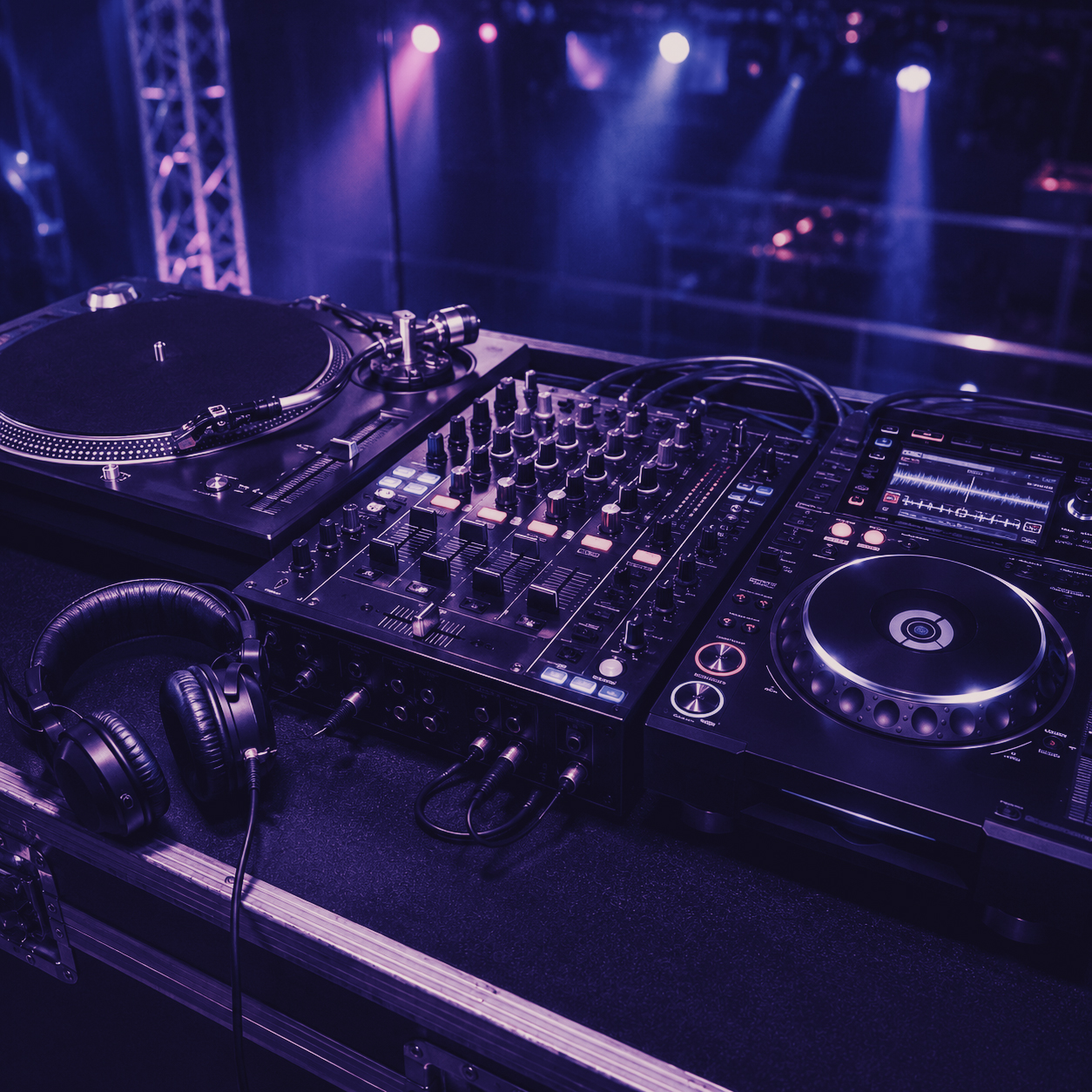
But do not go overboard. I have seen people fill a rack with compressors and equalizers before they have a decent pair of monitors. That is backwards. Your listening environment and your monitoring chain matter more than any outboard gear ever will.
Compressors and Pre-Amps: The Secret Sauce
Compressors are one of those tools that beginners often misuse. I certainly did. I would squash my vocals until they sounded lifeless, then wonder why my mix lacked energy. A compressor is not a set-and-forget box. It is a dynamic tool that needs careful threshold and ratio adjustments. I use a single hardware compressor, an FMR RNC, for tracking vocals and bass. It adds a tiny bit of character without destroying the transient. For most other compression, I use plugins inside my DAW because they offer more flexibility and recall.
Pre-amps, on the other hand, are worth spending on. A good pre-amp adds clarity and depth. I have used pre-amps from Focusrite, Warm Audio, and Universal Audio, and they all brought something different. The Focusrite pre-amps are clean and neutral. The Warm Audio units add harmonic distortion that flatters electric guitars. The Universal Audio pre-amps emulate classic console sound. None is better than the others. They are just different flavors for different tasks.
Building a Practical Kit
If I were starting over tomorrow with a modest budget, here is what I would buy, in order of priority:
- Audio interface with at least two inputs and good pre-amps (Focusrite Scarlett or Clarett)
- One dynamic microphone (Shure SM57) and one large-diaphragm condenser (Rode NT1 or AKG C214)
- Studio monitors that are honest for your room size (Yamaha HS series or KRK Rokit)
- Closed-back studio headphones for tracking (Sennheiser HD 280 Pro or Audio-Technica ATH-M50x)
- A single channel of outboard compression if you track a lot of vocals or bass
That kit covers the essentials. You can record, mix, and produce professional-sounding music with it. Everything beyond that is either specialization or luxury. I have added rack gear, more microphones, and even a second interface over the years, but I always come back to that core setup for the bulk of my work.
Why Earbuds and Consumer Headphones Are Not Enough
I hear this misconception a lot: "I have good earbuds, so I do not need studio headphones." Earbuds and consumer headphones are designed to make music sound exciting. They boost bass and treble to create a flattering listening experience. Studio headphones are designed to be flat and revealing. They show you the flaws in your mix so you can fix them. If you mix on earbuds, you will end up with a mix that sounds dull on good speakers because you overcompensated for the boosted bass. Use studio headphones for critical listening and earbuds only for final reference checks.

The same logic applies to everything in your signal chain. Every piece of pro audio equipment you choose should serve one purpose: to let you hear the truth and capture it accurately. If a piece of gear colors the sound in a way you do not understand, it will hurt you more than it helps. Learn what each component does to your signal, and you will stop chasing gear and start making better records.
I still buy gear sometimes. I recently added a Sennheiser MD 421 for toms and a pair of AKG K702 headphones for mixing. But I buy with intention now. I know what problem I am solving. That is the mindset that separates a musician who collects gear from one who uses it. The goal is not to own the most pro audio equipment. The goal is to own the right tools for the work you actually do. Once you figure that out, everything else falls into place.